What to Expect From Animation School Critique Sessions
The thought of having your animation work critiqued in front of classmates and instructors can trigger serious anxiety for new students entering Canadian animation programs. Whether you’re considering Sheridan College’s renowned Computer Animation program or Vancouver Film School’s intensive courses, understanding what happens during critique sessions can transform this nerve-wracking experience into your most valuable learning tool.
Canadian animation schools like Sheridan, VFS, and OCAD University have built their reputations partly on rigorous critique culture that mirrors real studio environments. These programs don’t just teach software and techniques—they prepare you for the daily feedback loops that define professional animation pipelines. This guide covers everything from critique formats and grading rubrics to emotional coping strategies, giving you concrete examples across 2D animation, 3D modeling, storyboarding, and life drawing disciplines.
How Critique Sessions Fit Into Canadian Animation Programs
Animation critique sessions at major Canadian institutions are embedded into weekly coursework rather than reserved for final projects. Schools like Sheridan College and Vancouver Film School structure their programs around frequent feedback loops that simulate professional studio dailies, where animators present work-in-progress shots for director approval.
The intensity and focus of critiques evolves significantly as students progress through their programs. First-year students typically receive broader feedback on foundational skills like gesture drawing and basic animation principles, while advanced students face industry-style reviews focusing on pipeline efficiency and market-ready portfolio pieces.
Different animation disciplines within Canadian programs have distinct critique rhythms and expectations. 2D animation courses often emphasize timing and character performance, 3D classes focus heavily on technical execution and rendering quality, while storyboard critiques center on visual storytelling clarity and pacing.
| Program Type (Diploma / Degree / Intensive) | Typical Year-Level | Critique Frequency | Common Class Types | Primary Feedback Focus |
|---|---|---|---|---|
| 4-Year Bachelor’s Degree | Year 1-2 | Weekly + Mid-terms | Life Drawing, 2D Fundamentals | Foundation skills, anatomy, timing |
| 3-Year Advanced Diploma | Year 2-3 | Bi-weekly + Project Milestones | 3D Animation, Character Rigging | Technical execution, pipeline workflow |
| Intensive Certificate | All levels | Daily to Tri-weekly | Storyboarding, Concept Art | Portfolio development, industry readiness |
| Graduate Programs | Advanced | Project-based + Thesis Reviews | Independent Study, Specialty Tracks | Professional innovation, research methodology |
| Part-time Continuing Ed | Mixed | Monthly + Final Showcase | Software Training, Skill Updates | Practical application, career transition |
The Role of Critiques in Building a Studio-Ready Skillset
Canadian animation programs design critique sessions to simulate professional studio dailies, where directors and supervisors review work-in-progress shots to ensure projects stay on schedule and meet quality standards. This approach prioritizes iteration speed and responsiveness to feedback over traditional academic grading, preparing students for the collaborative nature of animation production.
Unlike academic essays or exams where feedback comes after completion, animation critiques happen throughout the creative process. Students learn to present work at various stages—from rough thumbnails to polished animation—and incorporate feedback without taking criticism personally.
The critique process teaches students to articulate their creative choices and defend artistic decisions while remaining open to alternative approaches. This balance between creative confidence and collaborative flexibility becomes essential when working with directors, producers, and fellow animators in professional studios.
How Often You Can Expect Feedback in a Typical Semester
Most Canadian animation programs follow predictable feedback patterns that intensify as deadlines approach. Weekly critique sessions typically focus on skill-building exercises like gesture drawings or walk cycle assignments, while major project milestones—such as animatic presentations or final animation renders—trigger more comprehensive review sessions.
Diploma programs at schools like Sheridan tend to have more frequent, shorter critiques integrated into regular class time, while degree programs often schedule dedicated critique days where multiple instructors review student work. This difference reflects the intensive, industry-focused approach of diploma programs versus the broader academic context of university degrees.
Advanced students in their final year can expect portfolio-focused critiques that evaluate work against industry hiring standards rather than course curriculum. These sessions often include guest professionals who provide market-reality checks on demo reel quality and job-readiness.
Common Formats of Animation School Critique Sessions
Animation schools employ various critique formats depending on the type of work being reviewed and the stage of student development. Understanding these different approaches helps students prepare mentally and practically for each type of feedback session.
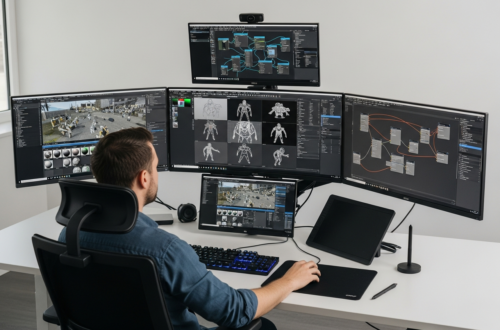
The most impactful critique sessions at top Canadian programs deliberately mirror professional studio environments. Students present their work using the same tools and terminology they’ll encounter in industry settings, from storyboard pitch sessions to 3D animation dailies using professional review software.
- Full-class screenings where all students present work sequentially while classmates and instructors provide live feedback
- Desk critiques involving one-on-one instructor visits to individual workstations during class time
- Small group rotations where 4-6 students form critique circles with guided peer feedback protocols
- Digital submission reviews using online platforms with annotation tools for asynchronous feedback
- Gallery walk formats where work is displayed around the classroom for informal feedback and discussion
- Professional presentation pitches that simulate studio client meetings or director approvals
Live Screenings, Desk Crits, and Online Reviews Compared
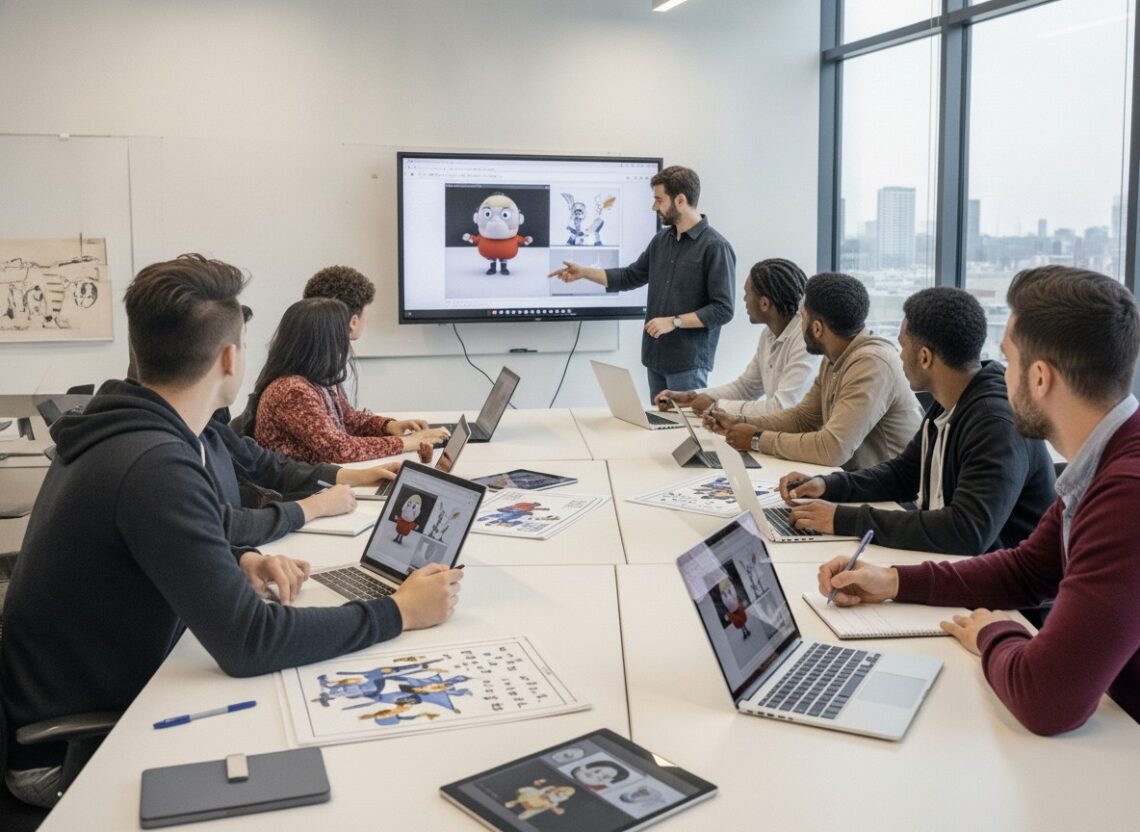
Live classroom screenings create the highest pressure environment but also provide the most comprehensive feedback, as multiple perspectives emerge from classmates and instructors simultaneously. These sessions require students to defend their work publicly and think quickly about suggested revisions, closely mimicking professional client presentations.
Desk critiques offer more intimate, personalized feedback but can feel isolating since students miss learning from their classmates’ critiques. Instructors often use desk crits for technical problem-solving or when addressing sensitive creative struggles that benefit from private discussion.
Online review systems allow for more detailed, thoughtful feedback since instructors can pause, rewind, and annotate specific frames or sequences. However, the asynchronous nature reduces the dynamic back-and-forth questioning that often leads to breakthrough insights during live critiques.
Who Is Critiquing You: Instructors, Peers, and Industry Guests
The source of your critique significantly impacts both the type of feedback you receive and how you should prepare for the session. Canadian animation programs typically blend input from faculty with extensive industry experience, structured peer feedback circles, and periodic guest reviews from working professionals.
Understanding each reviewer’s background and priorities helps students tailor their presentations and interpret feedback more effectively. Faculty members focus on educational objectives and skill development, while industry guests evaluate work against current market standards and hiring practices.
Peer critique sessions require careful moderation to maintain constructive focus, but they provide valuable perspective on how your work communicates to audiences. Learning to give and receive peer feedback becomes an essential professional skill, as studio environments rely heavily on collaborative review processes.
| Reviewer Type | Typical Background | What They Focus On | Tone & Style of Feedback | How to Prepare |
|---|---|---|---|---|
| Core Faculty | 10+ years studio experience + teaching | Curriculum objectives, skill progression | Structured, educational, encouraging | Review assignment requirements, show process work |
| Industry Instructors | Currently working professionals | Current industry standards, pipeline efficiency | Direct, practical, time-sensitive | Research current studio practices, prepare technical questions |
| Peer Students | Same program level, diverse specializations | Audience clarity, creative alternatives | Supportive, question-based, collaborative | Explain your creative intent clearly, ask specific questions |
| Guest Professionals | Studio directors, supervisors, recruiters | Hiring potential, portfolio strength | Honest, market-focused, networking-oriented | Present your strongest work, prepare elevator pitch |
| Alumni Mentors | Recent graduates, early-career professionals | Transition strategies, first-job readiness | Relatable, practical, career-focused | Ask about job search experiences, industry culture |
How Peer Critiques Usually Work in Canadian Animation Classes
- Structured presentation phase where each student shows their work for 2-3 minutes without commentary, allowing peers to absorb the material before discussion begins.
- Guided questioning round where peers ask clarifying questions about creative intent, technical choices, and problem areas the artist wants to address.
- Constructive feedback session using specific critique protocols like “I noticed… I wondered… Next time you might try…” to maintain supportive tone.
- Goal-setting discussion where the presenting student identifies 2-3 specific areas for revision based on peer input.
- Timeline commitment where students commit to showing revised work or progress updates in the next peer critique cycle.
Industry-Style Guest Critiques and Portfolio Days
Major Canadian animation schools like Sheridan College and Vancouver Film School regularly host portfolio review events where working industry professionals evaluate student work using current hiring standards. These sessions differ significantly from classroom critiques, focusing on marketability and professional readiness rather than educational development.
Guest critics often represent major studios like Pixar Canada, Industrial Light & Magic, or local companies such as Nelvana and Mercury Filmworks. They evaluate portfolios with the same criteria used for entry-level hiring, providing realistic assessments of a student’s job prospects and areas needing improvement.
These professional critique sessions typically follow industry presentation formats, with students given limited time slots to present their strongest work and respond to rapid-fire questions about their process, technical skills, and career interests.
What Exactly Gets Critiqued in Different Animation Courses
Animation critique content varies dramatically depending on the specific course and skill level, from foundational drawing exercises in first-year programs to complex 3D pipeline work in advanced classes. Understanding what instructors look for in each discipline helps students prepare more effectively for feedback sessions.
Canadian animation programs typically critique work that reflects real studio production needs, emphasizing both creative quality and technical execution. This dual focus means students receive feedback on artistic choices as well as professional standards for file organization, naming conventions, and software proficiency.
- Character animation cycles including walks, runs, and emotional acting performances evaluated for timing, spacing, and believability
- Life drawing and gesture studies focusing on anatomical accuracy, line quality, and capturing essential character or motion
- Storyboard sequences critiqued for visual storytelling clarity, pacing, camera language, and continuity between panels
- 3D modeling and texturing work assessed for technical cleanliness, edge flow, UV mapping efficiency, and rendering quality
- Character rigging and setup evaluated for animator usability, technical stability, and adherence to pipeline standards
- Layout and background design critiqued for composition, perspective accuracy, and integration with character animation
- Software-specific technical demonstrations including Maya scenes, After Effects compositions, and Harmony animation files
From Rough Thumbnails to Final Render: Stages of Work Under Review
Animation critique sessions address work at multiple stages of completion, each requiring different evaluation criteria and feedback approaches. Early-stage thumbnails and rough sketches focus on idea clarity and creative problem-solving, while finished animations receive technical and polish-focused critique.
Beginning students often struggle with presenting work-in-progress material, expecting critiques only on finished pieces. However, professional animation relies heavily on iterative feedback throughout production, making it essential to learn presenting and defending rough concepts, blocking passes, and technical tests.
Advanced critique sessions deliberately mix work at different completion stages, teaching students to provide appropriate feedback whether reviewing a colleague’s initial concept sketch or a nearly-finished animation sequence ready for final rendering.
Typical Feedback Criteria and Rubrics Used in Critiques
Canadian animation schools use structured evaluation criteria that balance artistic merit with technical proficiency, though the specific weight given to each factor varies by program focus and student level. Understanding these rubrics helps students anticipate feedback and self-evaluate their work before formal critiques.
Most programs distinguish between formative critique feedback designed to guide ongoing work and summative evaluation that impacts final grades. The critique process emphasizes improvement and professional development, while grading rubrics focus on meeting specific learning objectives and industry standards.
Advanced programs often use portfolio-based assessment where individual assignments contribute to an overall body of work evaluated against professional hiring standards. This approach means critique feedback serves dual purposes: immediate project improvement and long-term career preparation.
| Criterion | How Instructors Evaluate It | Examples in 2D/3D/Story | Common Issues Flagged |
|---|---|---|---|
| Animation Principles | Timing, spacing, squash/stretch application | 2D: Bouncing ball physics / 3D: Character walk cycles | Robotic movement, inconsistent timing |
| Anatomical Accuracy | Proportion, skeletal structure, muscle flow | Life drawing: Figure studies / 3D: Character modeling | Floating limbs, impossible poses |
| Visual Storytelling | Clarity of narrative, emotional communication | Storyboards: Scene transitions / Animation: Acting choices | Unclear character motivation, confusing staging |
| Technical Execution | Software proficiency, pipeline compliance | 3D: Clean topology / 2D: Layer organization | Messy file structure, rendering errors |
| Creative Problem-Solving | Innovation within constraints, artistic choices | Character design: Unique solutions / Layout: Camera angles | Generic approaches, missed opportunities |
| Professional Presentation | Portfolio quality, presentation skills | Demo reel: Pacing and editing / Pitch: Verbal clarity | Poor video compression, unclear explanations |
| Process Documentation | Research, iteration evidence, reflection quality | Concept art: Reference studies / Animation: Planning sheets | Lack of research, skipping planning stages |
| Collaboration Readiness | Feedback responsiveness, team integration | Group projects: Asset consistency / Critique: Constructive input | Resistance to feedback, style inconsistency |
How Grading Connects to Critique Comments
Most Canadian animation programs use critique feedback to inform grading decisions, but the relationship between verbal feedback and numerical scores isn’t always straightforward. Instructors typically separate developmental critique designed to improve work from evaluative grading that measures achievement against learning objectives.
Students often receive extensive critique feedback on areas for improvement while still earning strong grades for meeting assignment requirements and demonstrating growth. This approach encourages risk-taking and experimentation during the learning process rather than playing safe to protect grades.
Advanced portfolio courses may use critique sessions to identify work suitable for professional demo reels, with instructors flagging pieces that meet industry standards versus those that serve educational purposes but shouldn’t represent the student’s abilities to potential employers.
Balancing Technical Skill vs Story and Performance
Different Canadian animation programs place varying emphasis on technical execution versus creative storytelling, reflecting their industry connections and pedagogical philosophy. Programs with strong studio partnerships often prioritize technical pipeline skills, while university-based programs may emphasize conceptual development and artistic expression.
Students frequently struggle with critique feedback that seems to prioritize technical perfection over creative risk-taking, or conversely, values artistic vision while dismissing technical shortcomings. Understanding your program’s industry focus helps interpret feedback appropriately and set realistic improvement priorities.
Advanced students learn to balance both aspects, using technical skills to serve storytelling goals rather than treating them as separate concerns. Critique sessions increasingly evaluate whether technical choices support or distract from the intended emotional impact and narrative clarity.
Emotional Reality: How Critiques Feel and How to Cope
Even the most constructive animation critiques can trigger intense emotional responses, especially when creative work feels deeply personal. Canadian animation programs recognize that learning to separate feedback from self-worth represents a crucial professional skill that requires deliberate practice and support.
The public nature of many critique sessions amplifies emotional intensity, as students must process feedback while managing anxiety about peer judgment. Understanding that these feelings are normal and shared by classmates helps reduce the isolation that can accompany difficult critique experiences.
- Recognize emotional flooding during critiques and practice breathing techniques to maintain receptiveness to feedback
- Separate personal identity from creative work by using language like “this piece” rather than “my work” when receiving feedback
- Write down all feedback during sessions to avoid filtering out negative comments and ensure accurate recall later
- Schedule processing time after critiques before making major revisions, allowing emotional responses to settle
- Track progress patterns across multiple critique sessions to see improvement over time rather than focusing on individual feedback sessions
- Build support networks with classmates who understand the emotional challenges of creative critique
- Practice self-compassion by treating yourself with the same kindness you’d offer a friend receiving similar feedback
Turning Tough Critiques Into Growth Instead of Burnout
The most challenging critiques often provide the most valuable learning opportunities, but only if students can process the feedback constructively rather than defensively. Developing a growth mindset toward critique requires viewing negative feedback as information about areas needing development rather than judgments about personal ability or potential.
Successful animation students learn to prioritize critique feedback, focusing on 2-3 major areas for improvement rather than attempting to address every comment simultaneously. This selective approach prevents overwhelm while ensuring meaningful progress on the most impactful issues.
Long-term perspective helps maintain motivation during difficult feedback periods, as students track their development across entire semesters rather than individual assignments. Many successful animators report that their most criticized early work eventually became the foundation for their strongest professional skills.
How to Prepare Before, During, and After a Critique Session
Effective critique preparation extends far beyond completing the assignment, involving strategic presentation planning, emotional readiness, and systems for capturing and implementing feedback. Students who develop consistent preparation routines typically receive more useful feedback and experience less anxiety during critique sessions.
The most successful animation students treat critiques as performance opportunities, carefully organizing their materials and practicing their presentations to maximize the value of limited feedback time. This professional approach mirrors real studio environments where artists must efficiently communicate their creative decisions to directors and supervisors.
Post-critique action planning often determines whether feedback leads to meaningful improvement or gets forgotten in the rush toward the next assignment. Developing systematic approaches to processing and implementing critique feedback becomes increasingly important as programs intensify and deadlines compress.
| Phase | Key Actions | Why It Matters | Common Mistakes | Quick Fixes |
|---|---|---|---|---|
| Before Critique | Test playback, organize files, prepare specific questions | Maximizes feedback time, shows professionalism | Technical failures, unclear file naming | Create backup files, test equipment early |
| During Critique | Listen actively, take notes, ask clarifying questions | Ensures accurate feedback capture, demonstrates engagement | Defensive responses, missing key points | Prepare note-taking system, practice neutral responses |
| After Critique | Review notes, prioritize revisions, schedule follow-up | Translates feedback into actionable improvements | Procrastinating on revisions, ignoring difficult feedback | Set revision deadlines, tackle hardest changes first |
| Presentation Setup | Professional file formats, clear audio, stable internet | Prevents technical disruptions, maintains focus on content | Poor compression, incompatible formats | Use standard formats (MP4, MOV), test on different devices |
| Time Management | Arrive early, respect time limits, prepare concise explanations | Shows respect for process, maximizes available feedback time | Running late, rambling explanations | Practice 30-second work summaries, set multiple alarms |
| Follow-up Actions | Schedule revision time, seek additional clarification | Demonstrates commitment to improvement, builds relationships | Waiting until next deadline, avoiding difficult instructors | Email questions within 24 hours, book office hours |
Note-Taking and Action Plans After Critiques
- Transcribe handwritten critique notes into digital format within 24 hours while details remain clear and emotions have settled.
- Categorize feedback by priority using labels like “must fix,” “should improve,” and “could consider” to prevent overwhelm.
- Schedule specific revision sessions in your calendar rather than hoping to find time, treating feedback implementation as seriously as original assignment deadlines.
- Document before-and-after comparisons showing how you addressed critique points, creating a personal improvement portfolio.
- Follow up with instructors on major revisions to confirm you interpreted feedback correctly before investing significant work time.
Presenting Your Work Clearly in Limited Critique Time
Animation critique sessions typically allow only 2-5 minutes per student, requiring concise presentation skills that highlight key creative decisions and problem areas needing feedback. Students must quickly establish context, demonstrate their work, and articulate specific questions to maximize the value of limited instructor attention.
Effective critique presentations follow a consistent structure: brief creative intent summary, work demonstration, and specific areas where feedback would be most helpful. This approach directs instructor attention toward the most valuable feedback areas rather than generic comments about overall quality.
Advanced students learn to present work at appropriate stages, showing rough concepts when they need directional feedback and polished pieces when they want technical critique. Matching presentation content to the type of feedback needed prevents time waste and frustration.
Critique Etiquette and Classroom Culture in Canadian Programs
Canadian animation schools cultivate classroom critique cultures that balance honest feedback with respectful communication, preparing students for professional environments where constructive criticism is essential for project success. Understanding these unwritten rules helps students participate effectively and contribute to supportive learning communities.
Successful critique participation requires active engagement even when you’re not presenting, as observing others’ feedback sessions provides valuable learning about common problems and solutions. Students who remain checked out during classmates’ critiques miss opportunities to learn from shared struggles and breakthroughs.
The collaborative nature of animation production makes peer feedback skills as important as receiving instructor critique. Learning to offer specific, actionable suggestions that support classmates’ creative goals prepares students for the team-based problem-solving that defines professional studio environments.
Effective critique culture emphasizes constructive language that identifies specific issues and suggests potential solutions rather than vague judgments about quality. Students learn to phrase feedback in terms of audience experience and technical observation rather than personal preference or artistic taste.
How to Give Useful Feedback to Classmates
- Focus on specific observable elements like timing, spacing, or color choices rather than general statements about overall quality
- Connect feedback to assignment criteria and learning objectives rather than personal aesthetic preferences
- Offer concrete suggestions for addressing problems you identify, including references to successful examples when possible
- Ask clarifying questions about creative intent before suggesting alternatives to ensure your feedback aligns with their goals
- Acknowledge successful elements in addition to areas needing improvement to provide balanced perspective
- Use professional language that mirrors industry critique terminology and constructive communication patterns
Online vs In-Person Critique Sessions in Canadian Schools
The shift toward hybrid and online learning at Canadian animation schools has transformed critique session formats, requiring new approaches to file sharing, presentation technology, and engagement strategies. Understanding the advantages and limitations of each format helps students adapt their preparation and participation strategies effectively.
Online critique sessions offer certain advantages for animation review, including the ability to pause and replay sequences, zoom in on specific details, and provide written annotation alongside verbal feedback. However, they also present challenges in maintaining engagement, managing technical difficulties, and creating the collaborative energy that characterizes effective in-person critique sessions.
Many Canadian programs now use hybrid critique models that combine online submission systems with live presentation sessions, allowing instructors to review work in detail beforehand while maintaining the dynamic discussion benefits of group critique sessions.
| Format | Tools Used | Advantages for Animation Students | Challenges and Limitations | Best Practices |
|---|---|---|---|---|
| In-Person Classroom | Projectors, shared screens, physical materials | Dynamic discussion, peer energy, immediate clarification | Technical setup time, viewing angle limitations | Test equipment early, prepare backup formats |
| Live Video Conference | Zoom, Teams, screen sharing, breakout rooms | Easy recording, detailed screen control, flexible timing | Internet connectivity issues, engagement challenges | Stable internet, backup connections, cameras on |
| Asynchronous Online | LMS platforms, annotation tools, discussion forums | Detailed written feedback, time for reflection | Delayed responses, less dynamic interaction | Clear file naming, context descriptions |
| Hybrid Combination | Mixed delivery, cloud storage, collaborative platforms | Combines benefits, flexible participation options | Complex coordination, varying tech comfort levels | Consistent file standards, clear communication |
Staying Engaged and Visible in Remote Critiques
Remote critique sessions require deliberate strategies to maintain the engagement and collaborative energy that makes feedback sessions valuable. Students must work harder to signal attention and participation when physical presence cues are limited or absent entirely.
Successful online critique participants keep cameras on, use chat functions strategically to ask questions and offer supportive comments, and practice active listening techniques that demonstrate engagement even through screen interfaces. These behaviors help maintain the community aspects of critique culture in digital environments.
Technical preparation becomes even more critical in remote settings, where connection problems or software issues can derail entire presentation sequences. Students learn to have backup plans, test systems in advance, and communicate technical difficulties quickly to minimize disruption for classmates and instructors.
Managing Tech and File Delivery for Smooth Reviews
Professional animation production relies on standardized file naming conventions, compression settings, and delivery formats that ensure compatibility across different systems and software versions. Canadian animation schools increasingly incorporate these technical standards into their critique requirements, preparing students for industry pipeline expectations.
Students must balance file quality with practical considerations like upload speeds, storage limitations, and playback compatibility across different devices and platforms. Understanding compression settings, container formats, and resolution requirements becomes essential for effective critique participation.
Establishing consistent organizational systems for work-in-progress files, final versions, and revision iterations prevents confusion during critique sessions and demonstrates professional work habits that transfer directly to studio environments.
Using Critique Sessions to Build Your Demo Reel and Portfolio
Every piece critiqued in Canadian animation programs represents potential portfolio material, but students must learn to evaluate which work meets professional hiring standards versus educational exercises that served their learning purpose. Critique feedback provides essential guidance for making these distinctions and focusing revision efforts on pieces with genuine career potential.
Industry hiring practices favor shorter, focused demo reels that showcase specific skills over longer compilations that demonstrate range but dilute impact. Critique sessions help students identify their strongest individual sequences and understand how to edit them into compelling professional presentations that align with job market expectations.
Different animation specializations require distinct portfolio approaches, with 2D character animators, 3D technical artists, and storyboard artists each needing to emphasize different skills and presentation formats. Understanding these distinctions helps students interpret critique feedback in context of their career goals and market positioning.
- Document all critiqued work systematically using consistent naming and organization to track improvement over time and identify portfolio candidates.
- Separate educational exercises from portfolio pieces by evaluating critique feedback against professional hiring standards rather than course grades.
- Focus revision efforts on pieces with strong fundamentals that need polish rather than work requiring complete creative overhauls.
- Research current industry demo reel standards for your target specialization and compare your critiqued work against these benchmarks.
- Create multiple reel versions targeting different job types and studio styles based on critique feedback about your strengths.
- Regularly update portfolio selections as your skills improve, replacing weaker pieces with stronger work from recent critique sessions.
- Seek industry professional critique on portfolio selections to validate choices made based on educational feedback.
Choosing Which Critiqued Pieces Make the Final Cut
Portfolio selection requires ruthless evaluation of work quality against current industry standards, often meaning that pieces you’re personally attached to don’t represent your abilities effectively to potential employers. Critique feedback provides objective perspective on which work demonstrates professional competence versus educational progress.
Students must learn to prioritize technical execution and creative problem-solving over personal meaning or effort invested when selecting portfolio pieces. Work that required extensive struggle to complete may represent important learning but doesn’t necessarily showcase abilities effectively in competitive job markets.
Advanced critique sessions increasingly evaluate work through the lens of industry hiring practices, helping students understand how recruiters and studio supervisors assess portfolios differently than educational environments. This perspective helps align portfolio choices with market realities rather than academic achievement.